
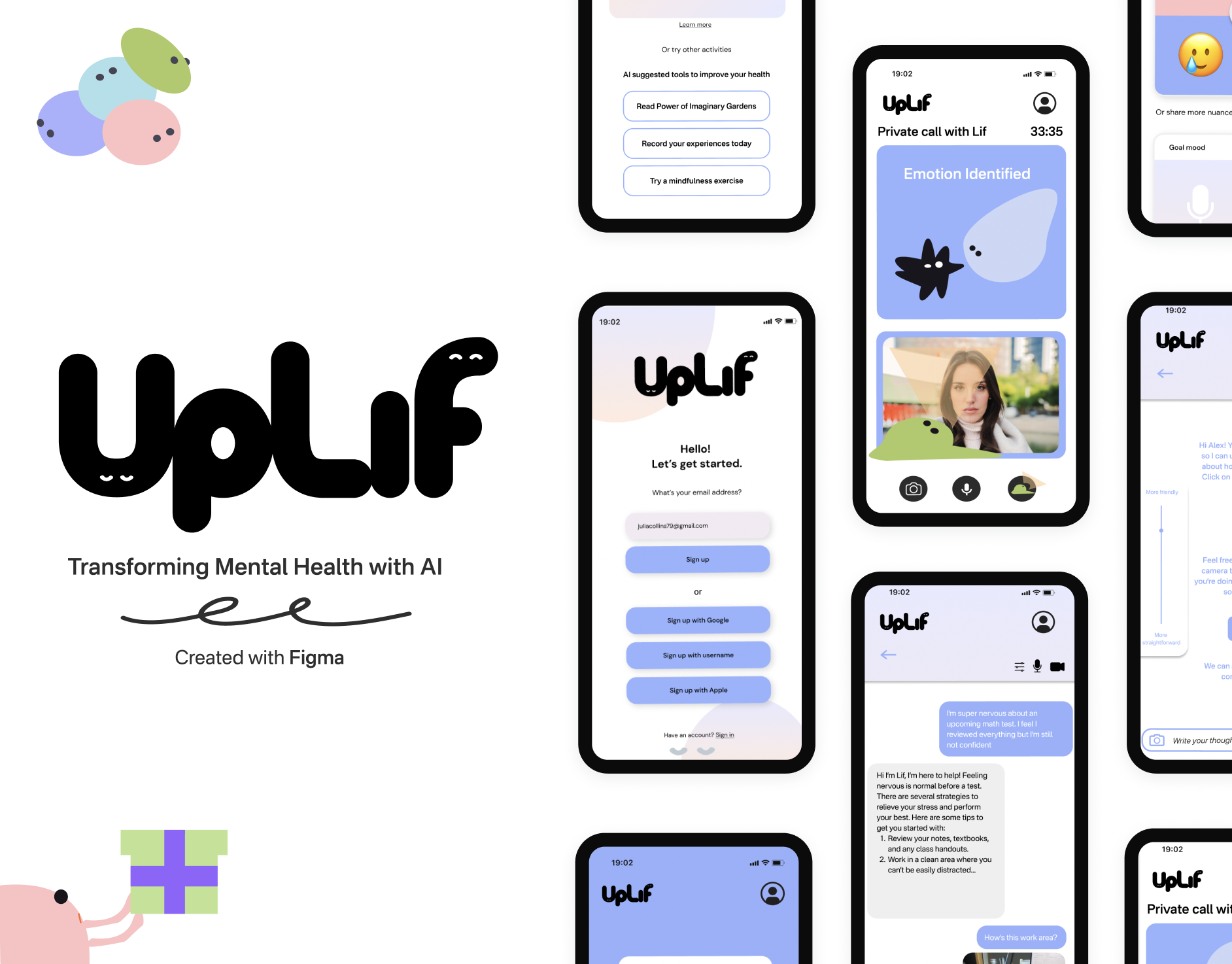
Uplif features daily check-ins, anonymous friend connections, and a personalized therapy chat. Users could complete an onboarding personality quiz, earn points for completing daily exercises, and enjoy a wide range of educational resources.
This project was created during Innovate48, a virtual UX hackathon hosted by Liftyz, a tech career school, and Design Buddies, a global design community. One of the prompts was to create a mental health app including AI.
We divided our tasks to ensure we could finish our project by the end of the UX hackathon. There were some parts I worked on completely, such as doing the prototyping. There were other parts that I contributed helping to finish alongside my teammates.
First, we needed a better understanding of the users, their needs, and
opportunities for improvements.
The Problem:
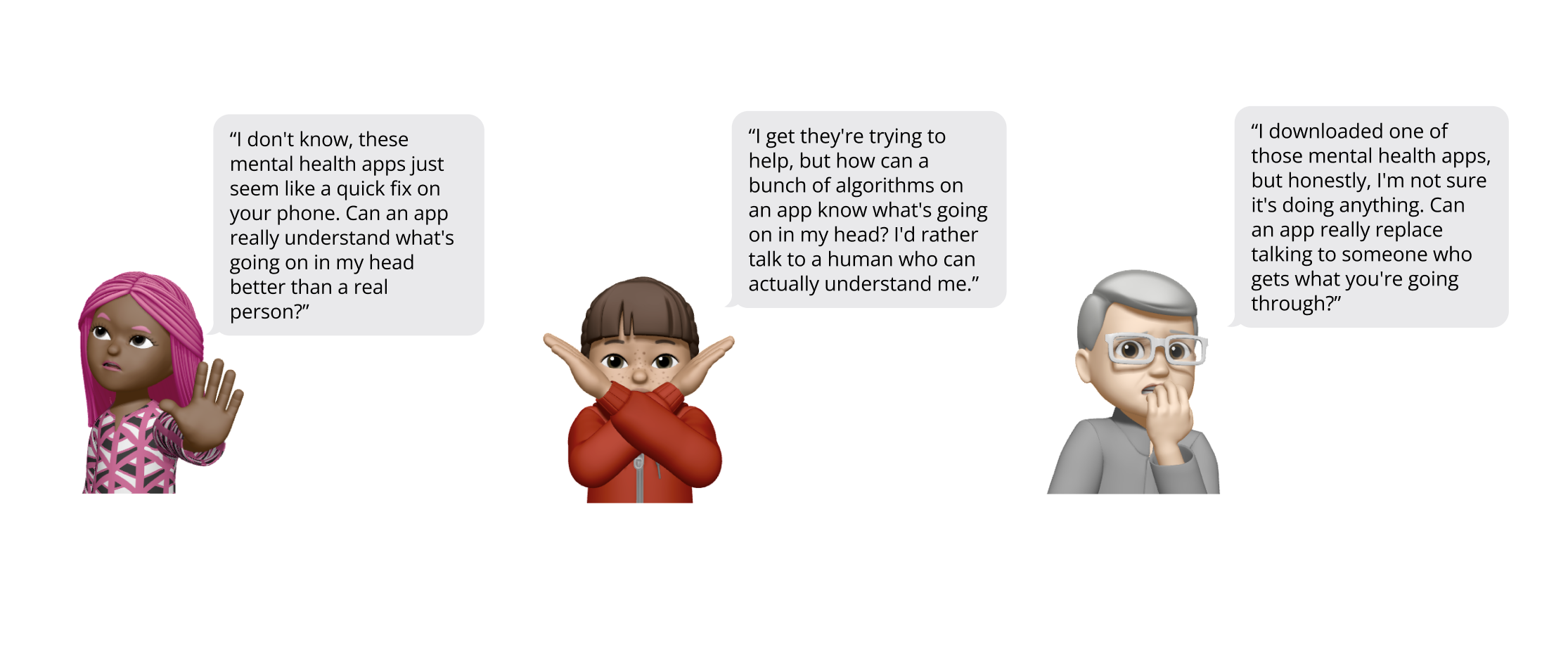
According to research, users are uncertain about mental health apps, wondering if they can truly tackle their issues, and question whether reaching out to a real therapist might be more effective than an app.
The Goal:
To create an inclusive and accessible safe space that not only promotes users' well-being but also nurtures meaningful and authentic connections.
References: Research Article and News Article.

Barriers to Access: Users' uncertainty about mental health apps presents a barrier to accessing crucial mental health support.
Delay in Intervention: Uncertainty in app effectiveness may lead to delays in seeking help, impacting timely mental health interventions.
Widespread Impact: This uncertainty, if unaddressed, could cause a number of individuals from using digital mental health solutions.
Risk of Avoidance: Concerns about app efficacy may cause users to avoid mental health interventions altogether.

User Engagement:
Users struggle with inconsistent engagement, resulting in limited long-term benefits and effects of mental health apps.

Lack of Personalization:
Generic approaches in current mental health apps may fail to address individual needs and preferences, leading to a lack of personalization in the user experience.
Enhanced Privacy Features:
Design robust privacy features and transparent policies to address users' concerns about the security of their health data, fostering trust in the app.
Accessibility and Affordability:
Incorporate accessibility features, such as voice commands and text-to-speech, to address accessibility barriers.
Privacy Concerns:
Users worry about the security and privacy of their sensitive health data, hindering their trust in mental health apps.
Gamification and Personalization:
Interactive features, using gamification, daily challenges, and rewards to enhance user engagement. Incorporate AI to tailor interventions based on user preferences.
At this stage, we wanted to pin point the goal and start ideating different solutions.
Create an inclusive and accessible safe space that not only promotes users' well-being but also nurtures meaningful and authentic connections?

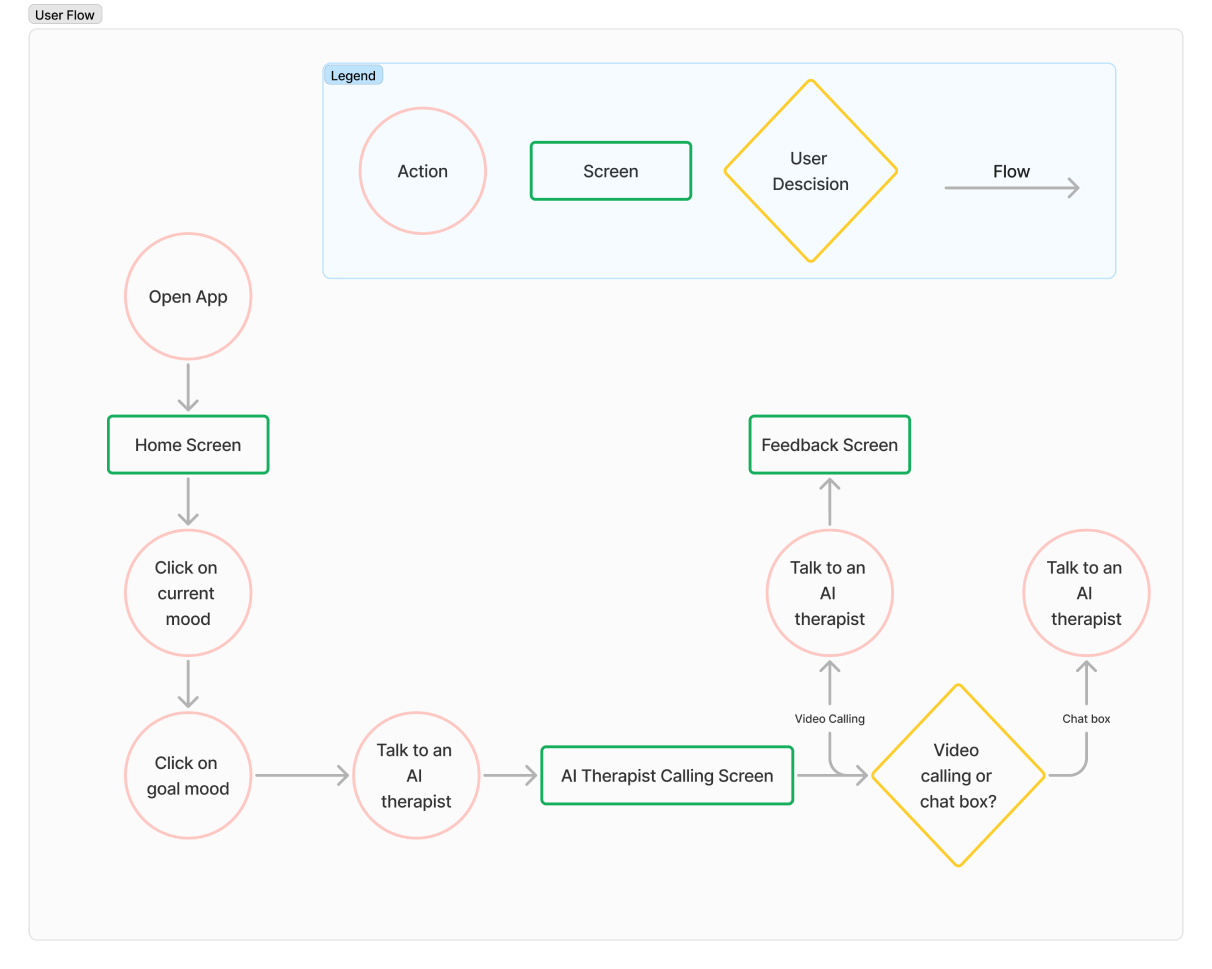
User task: Use the UpLif app to talk to a personalized therapy chat.
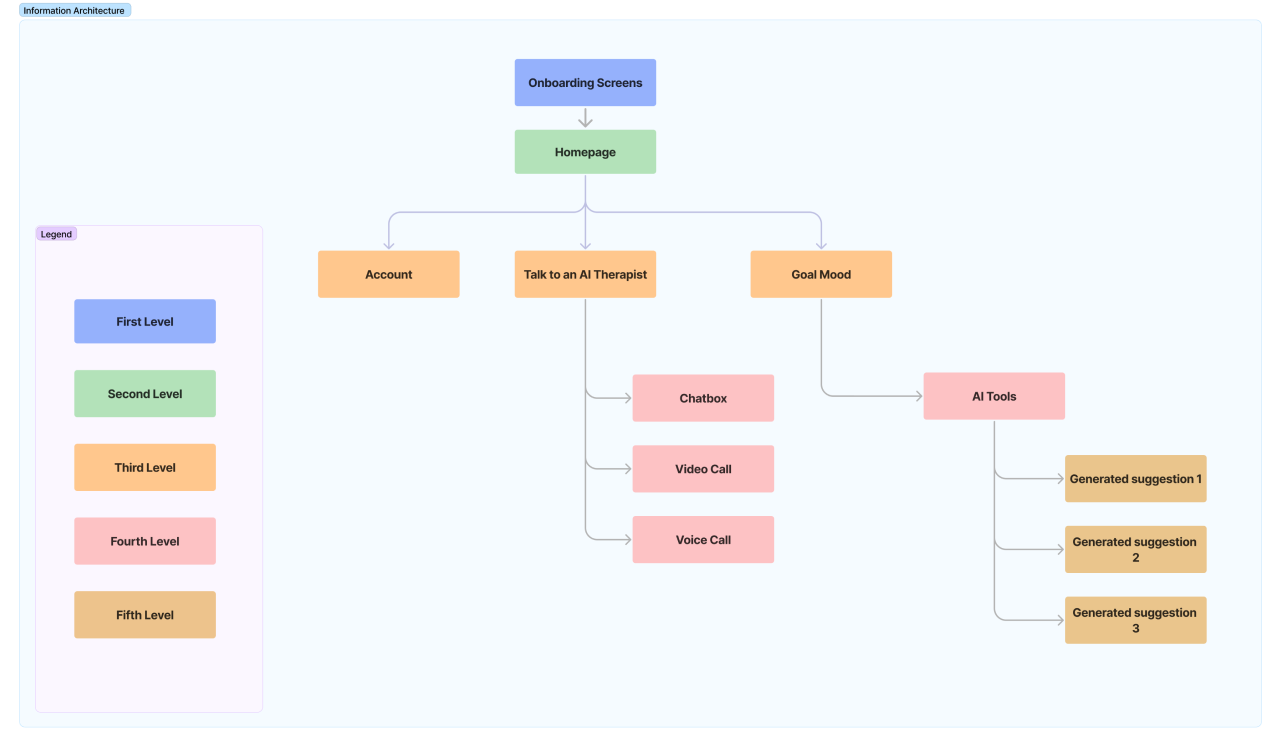
Sitemap: Categorizing the content of the app into different levels.
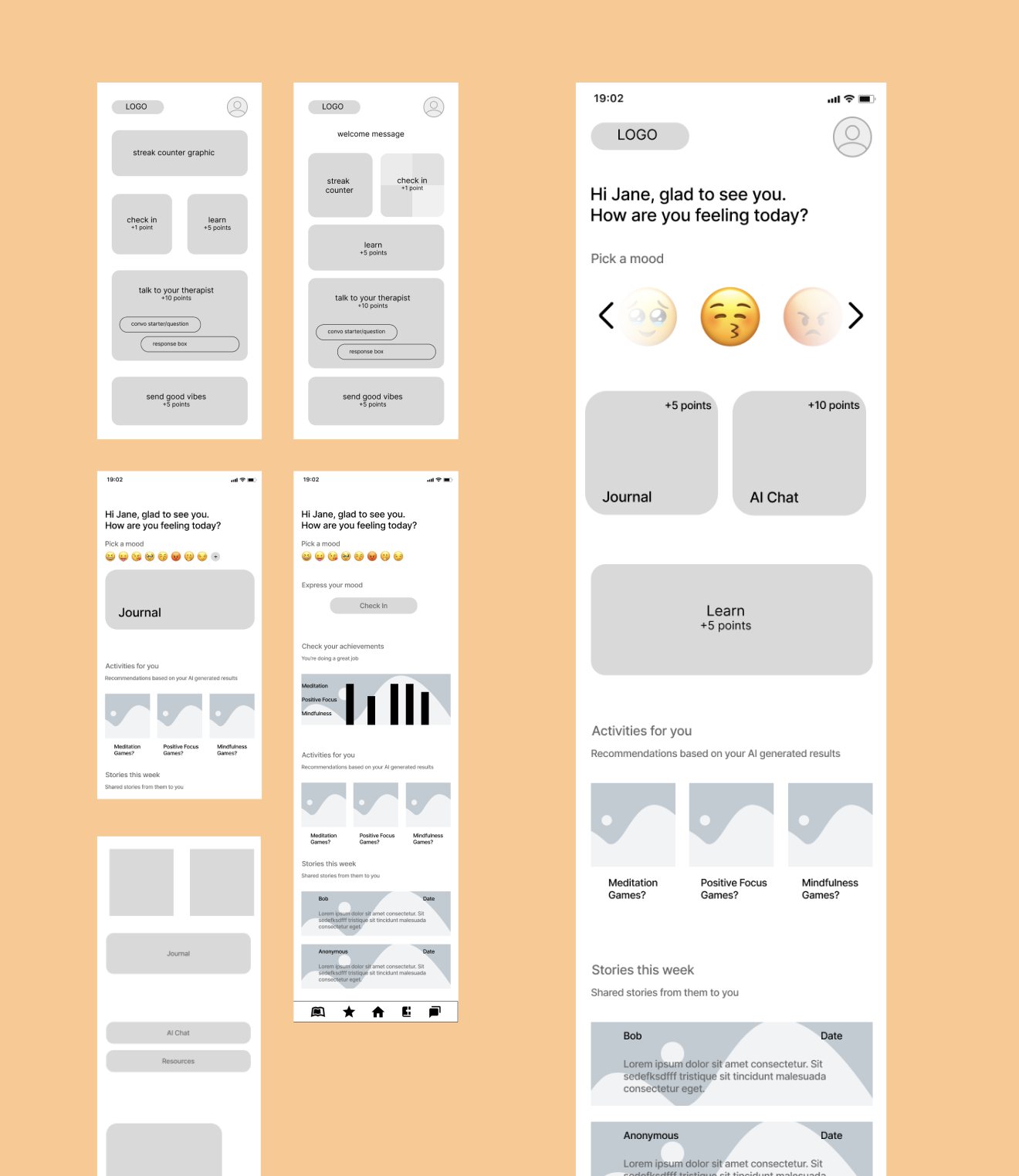
Gamified home screen featuring various AI-powered activities, such as meditation games, user achievement graph, and stories from other users.
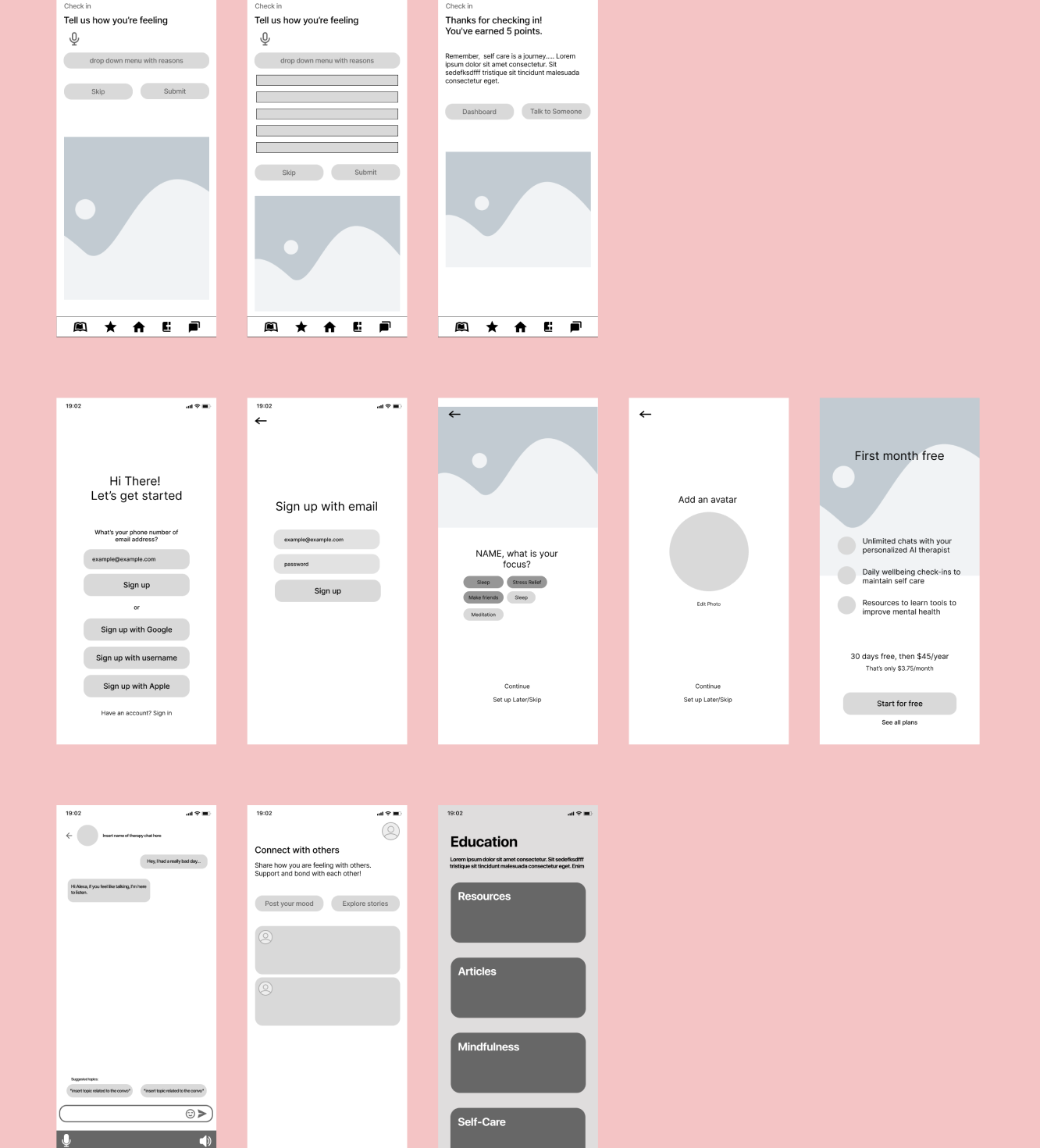
We asked for feedback based on our current low-fidelity wireframes.
Our focus is too broad and needs to be narrowed down. There are too many features.
Lack of clarity on what the user is supposed to do or what the goal is when they use this app since there are too many designs, and an unclear path for the user to follow.
Most mental health apps already have the AI chatbox feature. There isn’t particularly a unique concept/idea, so it’s important to think outside of the box and develop new ideas.
Streamlined ideas and screens by following our user flow and site map.
After our usability testing, we narrowed down our ideas, decided to focus on our primary user flow to stay on track, and created an innovative feature allowing users to customize their AI-therapist.
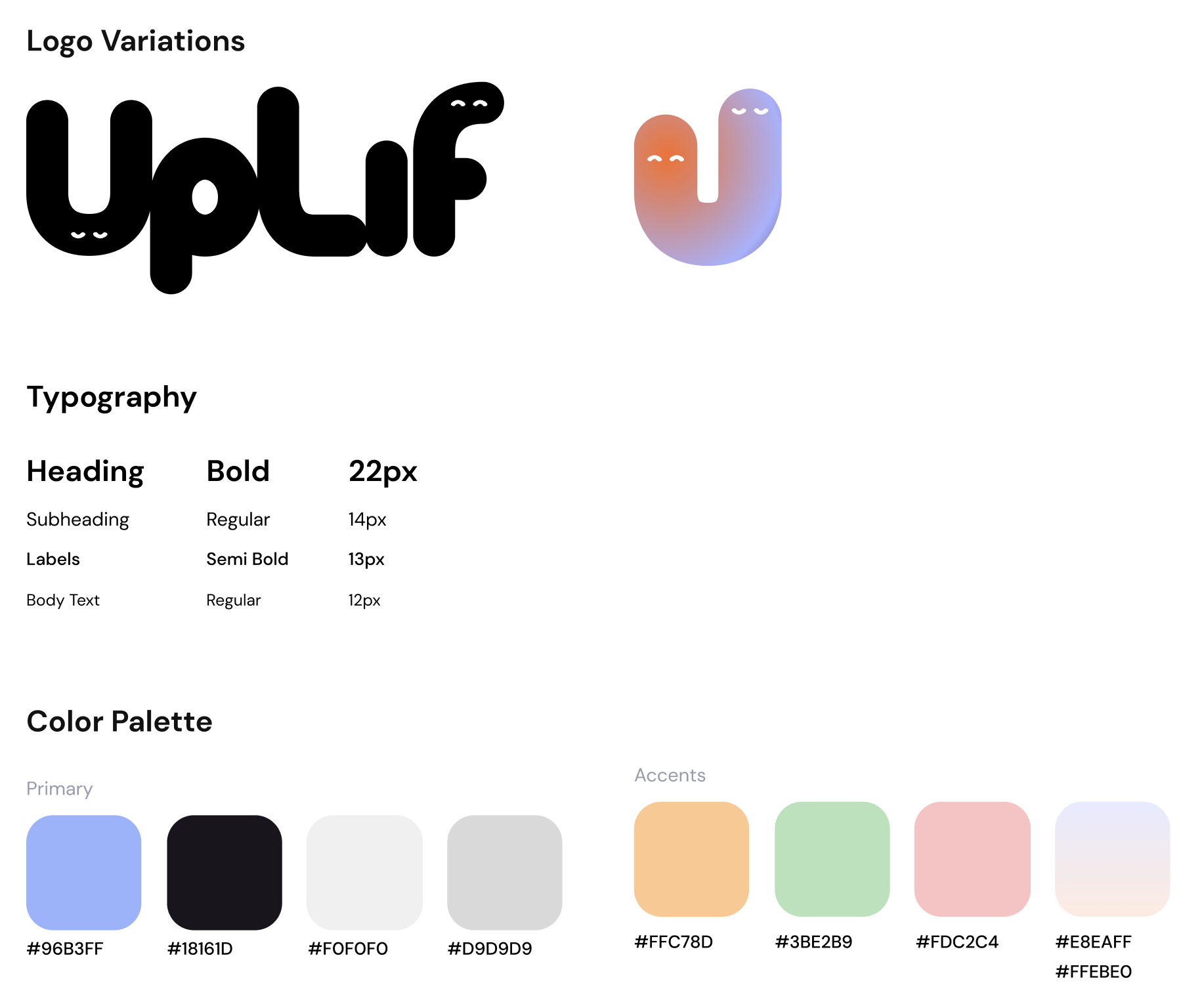
Logo variations, clear typography, and the colour palette.
Uplif is an AI-powered mental health app, featuring daily check-ins, anonymous friend connections, and personalized therapy chat. Users could complete an onboarding personality quiz, earn points for completing daily exercises, and enjoy a wide range of educational resources.

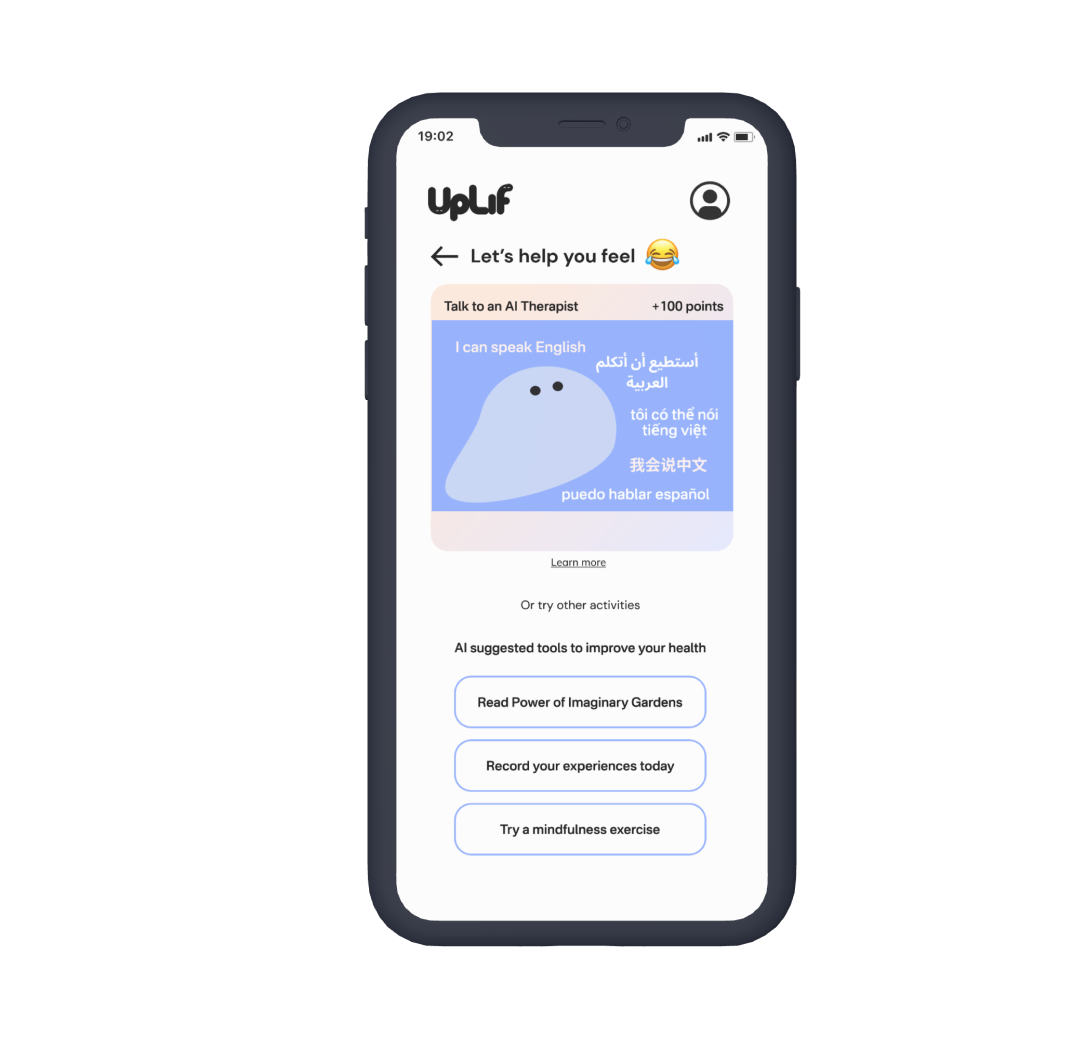
AI Therapist: Personalized facial scanning and voice recognition that determines complex user emotions.
Engaging Exercises: Encouraging regular mental health self-checks with daily activities based user’s mood, past interactions, and performance.
AI-Driven: Using the user’s input, feedback on calls and preferences for AI therapist personality, Uplif customizes activities and interactions for the user.

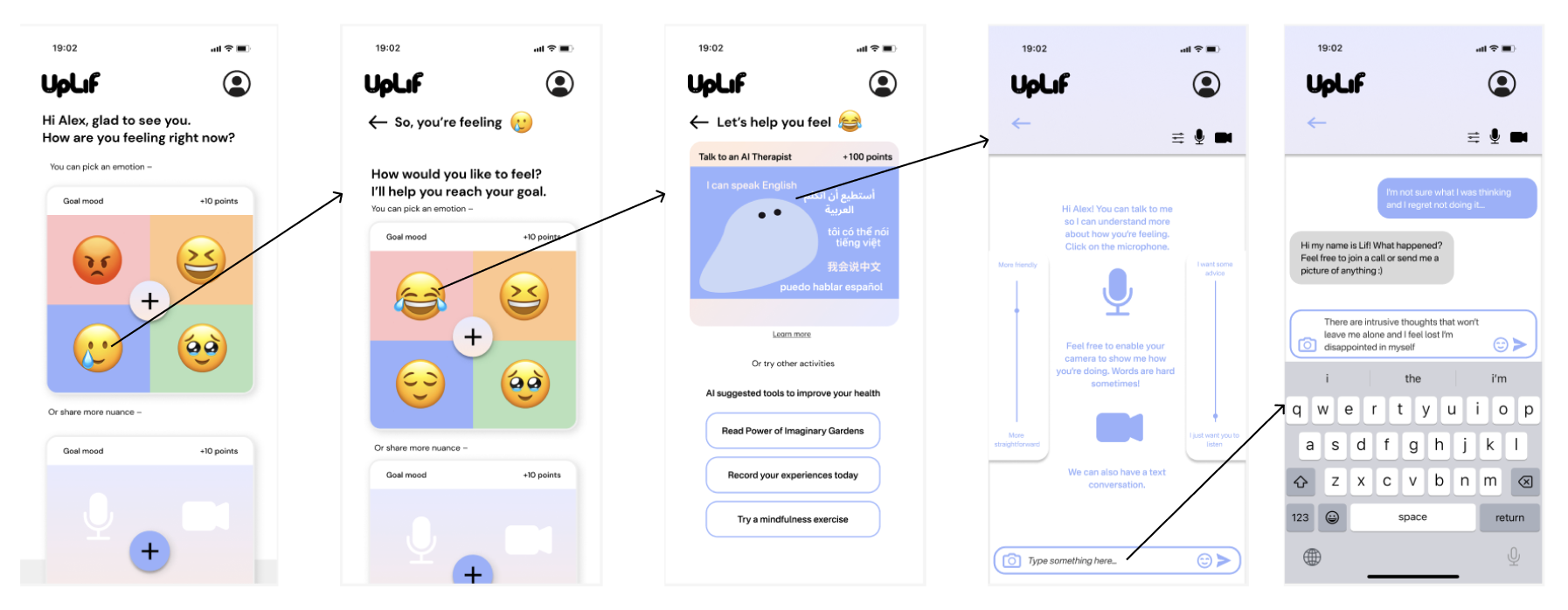
During the testing phase we did a user comparison to understand the path that different users used when going through the app.

High-contrast colours for texts and backgrounds to meet at least WCAG AA contrast ratio.
Sticking to a simple user flow to ensure simplicity in the design, and to make navigation intuitive for the user.
Choosing legible fonts and making sure they are at appropriate sizes for users to read.


Freemium Model: Basic features free, premium subscription for advanced AI Therapist sessions.
In-App Purchases: Allow users to purchase additional exercises tailored to specific needs and show diversity of exercises and their potential impact on mental well-being.
Trial Period: Allow users a one-month trial of the premium subscription to experience the full range of features and communicate the trial period's duration and the benefits users will access.
How can we truly make our app accessible and inclusive for users unable to pay?
Regularly Rotating Free Trial: Create a system where premium content becomes free on a rotating basis. This allows users to access advanced features and content for a limited time without having to make a financial commitment.
Partnerships with NGOs and Organizations: Collaborate with non-profit organizations and mental health initiatives to provide free access to for specific groups or during special campaigns. Extend access to users in need, such as those facing financial challenges or belonging to underprivileged communities.
How are we measuring impact?

User Engagement: View app’s daily active users, monthly active users, session length, and retention.
Customer Acquisition: Analyze user growth rate and acquisition stemming from users who opt to purchase the full features of the app after the trial period.
User Satisfaction: Measure the level of satisfaction users have with app by viewing apps or user feedback online.
